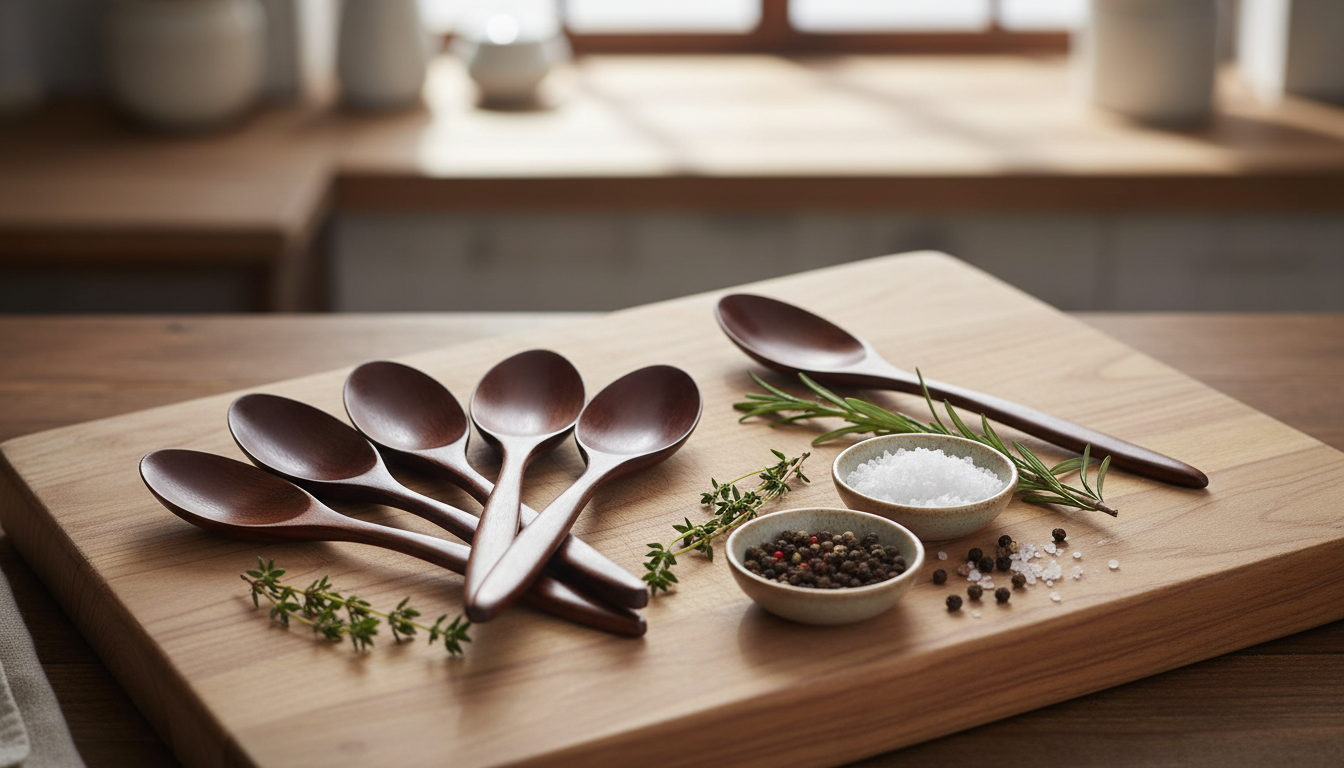
Eating with a wooden spoon can be a healthy choice when the spoon is well-made, properly finished, and cared for. Wood is naturally non-reactive with most foods, so it typically won’t add a metallic taste or interact with acidic ingredients the way some metals can. It’s also gentle on cookware and comfortable to use with hot foods because it doesn’t conduct heat as quickly as metal.
A quality wooden spoon has a smooth surface, no splinters, and a food-safe finish (or no finish at all, depending on the wood). Because wood isn’t porous in the same way as a sponge, routine washing and thorough drying go a long way toward keeping it clean. Many people also prefer wooden utensils because they avoid chips or flakes that can occur with damaged plastic tools.
The main concern is wear and tear. Deep cracks, rough spots, or splitting can trap food residue and moisture, which makes thorough cleaning harder. If a spoon smells rancid, stays sticky after washing, shows darkened patches that don’t scrub out, or has visible mold, it’s time to replace it. Using a wooden spoon for long periods in standing water or running it through a dishwasher repeatedly can speed up damage.
Wash wooden spoons soon after use with warm water and mild dish soap, then dry them completely. Avoid soaking for extended periods and skip the dishwasher when possible. To extend life and reduce drying or cracking, condition the spoon occasionally with a food-grade mineral oil or a dedicated utensil oil/wax, letting it absorb and wiping away excess.
Hardwoods (such as maple, beech, olive, or walnut) tend to hold up better than softer woods. A tighter grain generally resists moisture absorption more effectively and stays smoother over time, which can make cleaning easier and improve longevity.
For a deeper look at safety, maintenance, and what to watch for as utensils age, visit https://cutleryspot.shop/is-eating-with-a-wooden-spoon-healthy/.
Wash with warm, soapy water right after use and dry thoroughly. For extra freshness, a brief wipe with white vinegar or a quick rinse and immediate drying can help, but avoid long soaks that can cause cracking.










Leave a comment